Our Story
How a 28-year-old priest from the Banat, a handful of Hungarian and German families, and a lot on Woodlawn Avenue became one of the most remarkable parishes in Los Angeles.
A parish is born
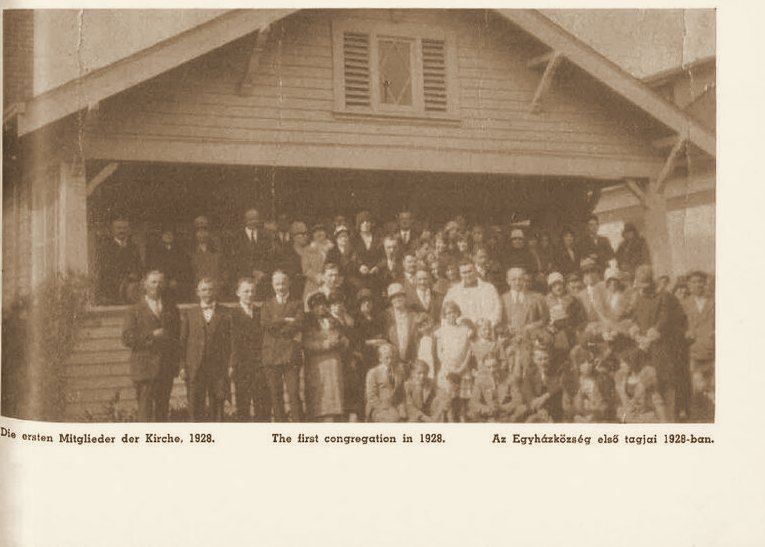
The St. Stephen Society forms under president Béla Sarkady, aided by the Hungarian Sisters of Social Service. At Bishop John J. Cantwell’s invitation, Fr. Mathias Lani — a 28-year-old priest of German-Hungarian family from the Banat — arrives on April 19, 1928 and offers the first parish Mass three days later. Read his story →
Four languages under one roof
Lots are purchased on Woodlawn Avenue and the first chapel is dedicated in 1930. German-Hungarian families from the Banat, Batschka and Srem ask to join, and Fr. Lani makes the parish bilingual. A Mexican community follows in 1933, then an English-speaking group — making St. Stephen’s the only four-language parish west of the Mississippi, with up to six Sunday Masses. The little wooden sign by the confession room still keeps count: one ring for English, two for German, three for Hungarian, four for Spanish.
Culture on parade
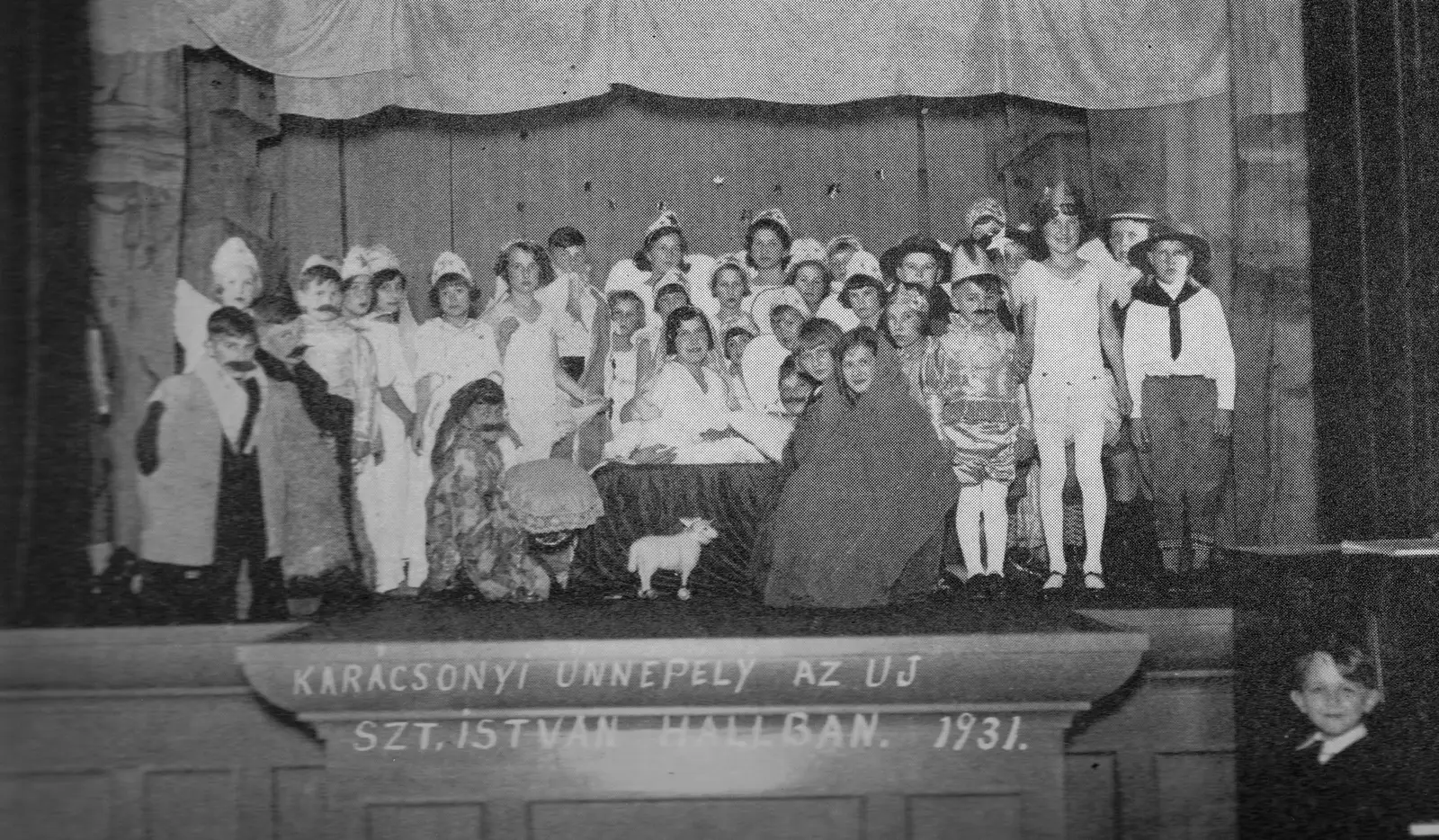
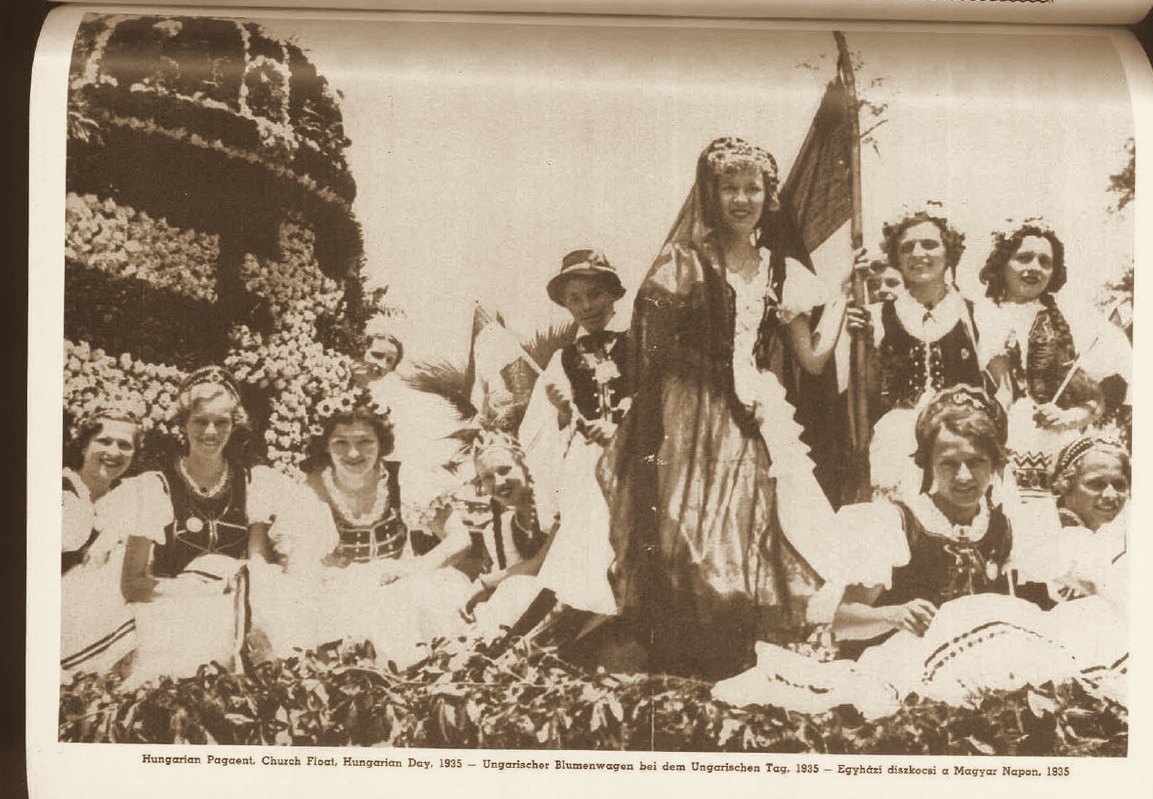
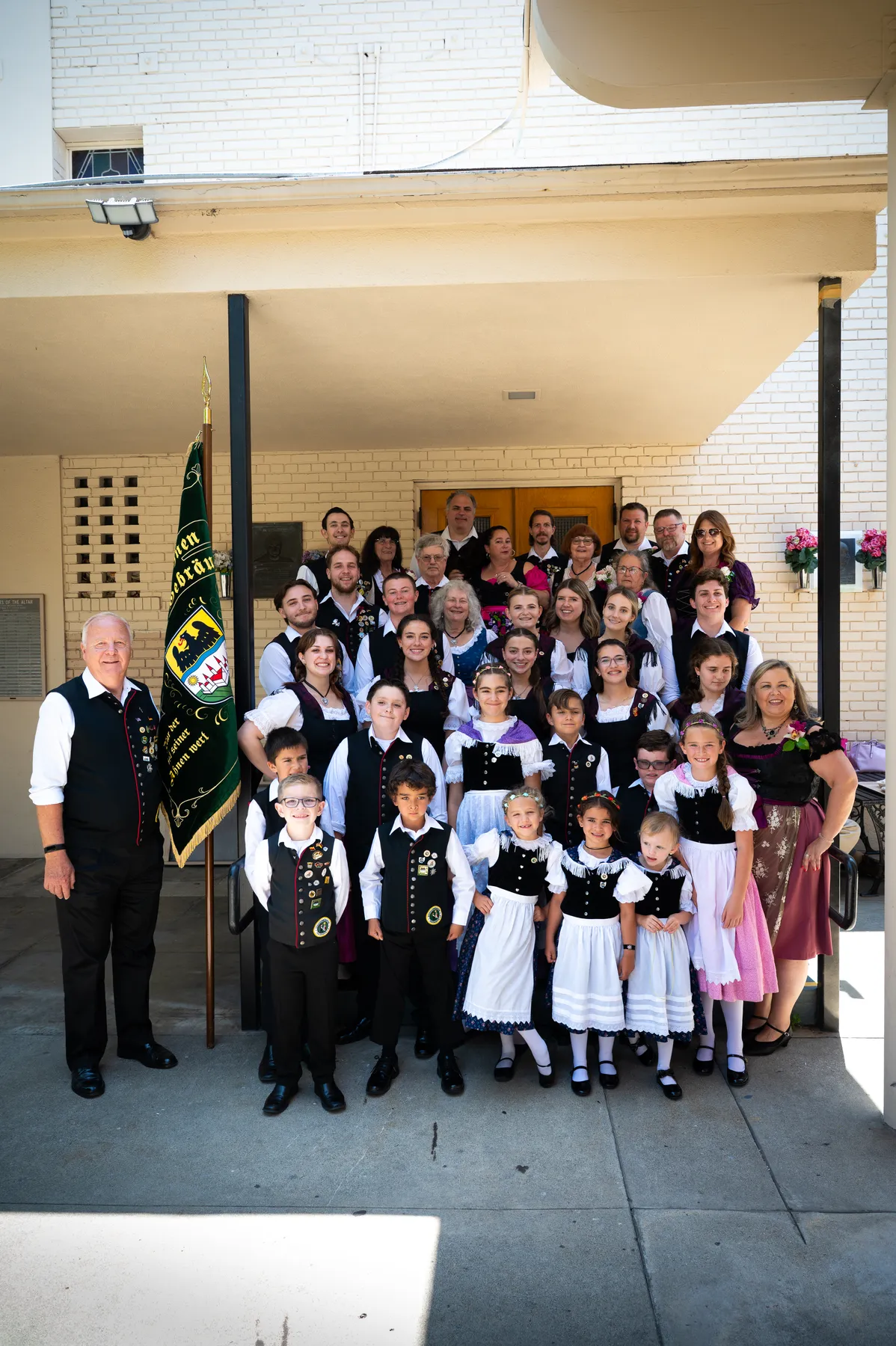
The parish carries its heritage into the life of the city — folk costume, music, scouting and pageantry that continue in the Hungarian and German communities to this day.
The “Ellis Island of Los Angeles”
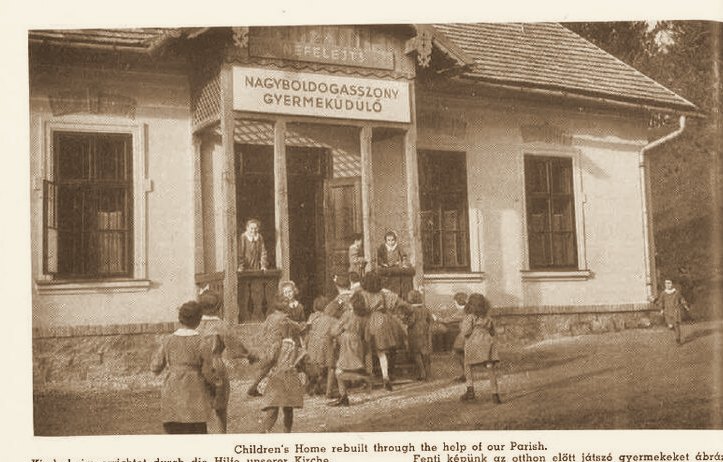
Through American-Hungarian Relief, the parish becomes a national hub for postwar aid — over $250,000 sent to Hungary and a children’s home rebuilt there — while resettling displaced persons of seventeen nationalities in Los Angeles. In 1948, Cardinal József Mindszenty sends Fr. Lani a testimonial letter. In 1953 the parish celebrates its Silver Jubilee at the Wilshire Ebell Theatre; Fr. Lani dies the following year.
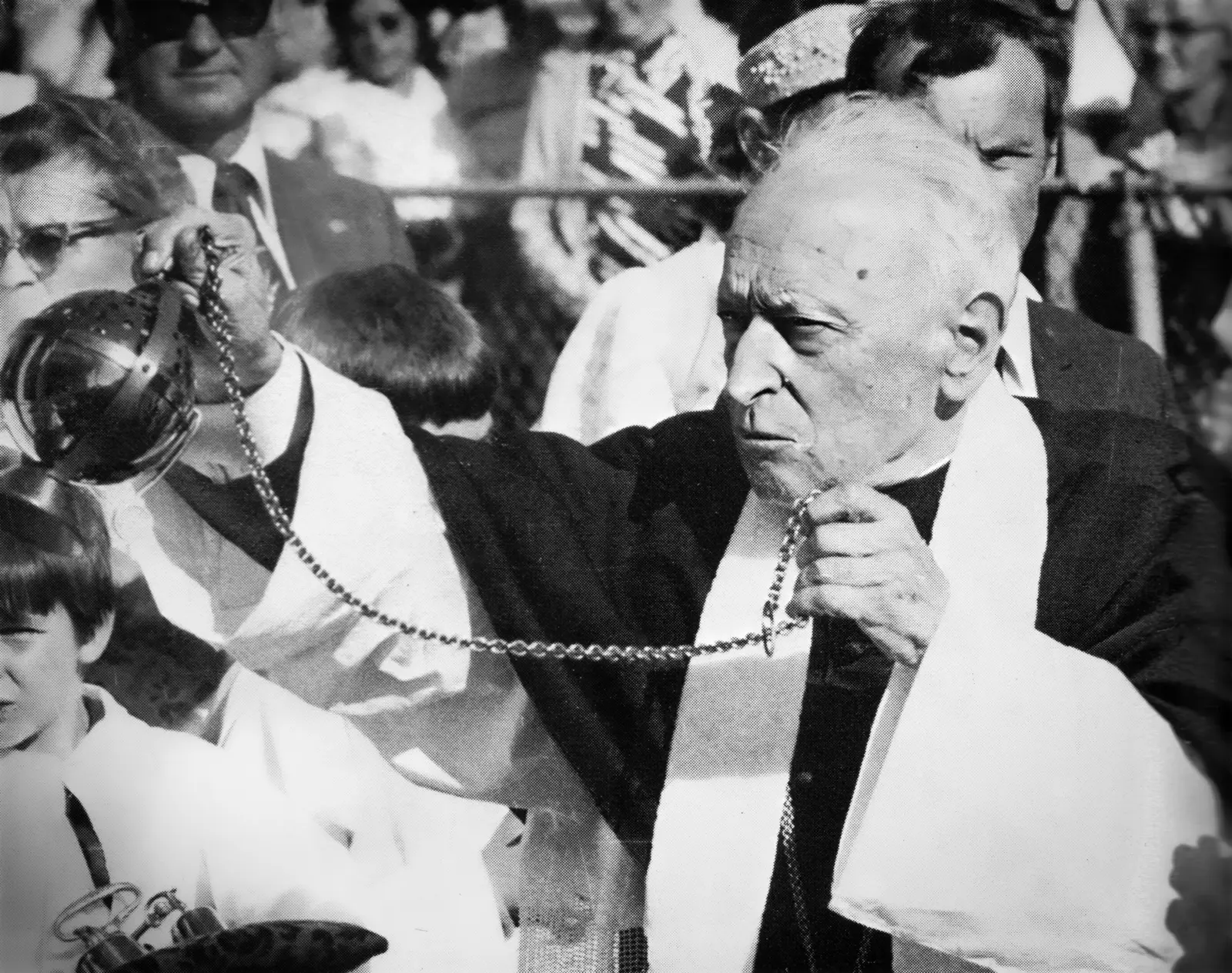
The Cardinal at our altar
Cardinal Mindszenty — the “dry martyr” who spent 23 years imprisoned and confined for the faith — makes a pastoral visit to the parish that had fed his broken homeland.
A golden age
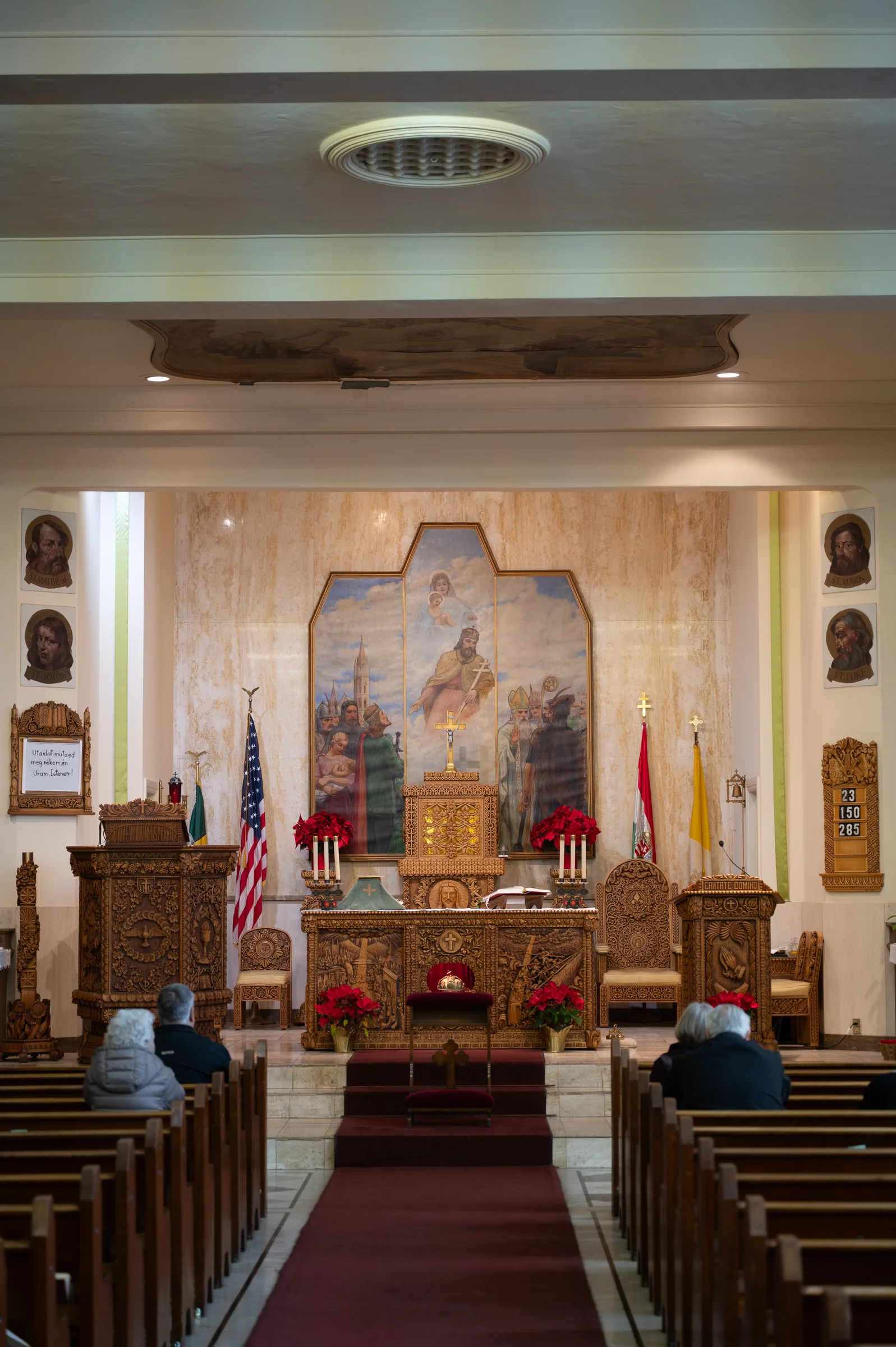
Under Fr. Benedict Horvath, O.Praem., the parish is renewed: earthquake retrofit, travertine facing, a new pipe organ, a Hungarian school that grows past 100 students — and the commissioning of master carver Béla Ferencz, who from 1981 to 1986 transforms the entire sanctuary into Hungarian folk art. Explore the carved sanctuary →
Perseverance and partnership
After difficult years, the parish returns to its bilingual roots and is twinned with nearby St. Patrick parish. Finances stabilize thanks to the properties acquired decades earlier — the foresight of one generation carrying the next. The parish celebrated its 90th anniversary in 2018; its centennial approaches in 2028.
“Being in this church is like being already in Paradise.”Fr. Benedict Horvath, O.Praem. · Pastor 1967–1990