A Bible carved in wood
For five years, a Transylvanian master carver filled our sanctuary with basswood, maple and birch — weaving together Scripture, Szekler folk art, and a thousand years of Hungarian history. Open any piece below to read its story.
Eight windows into the sanctuary
Every motif has a source — archaeological finds from Galgóc to Zöldhalompuszta, Szekler village gates, Matyó embroidery. Tap a carving to open its story.
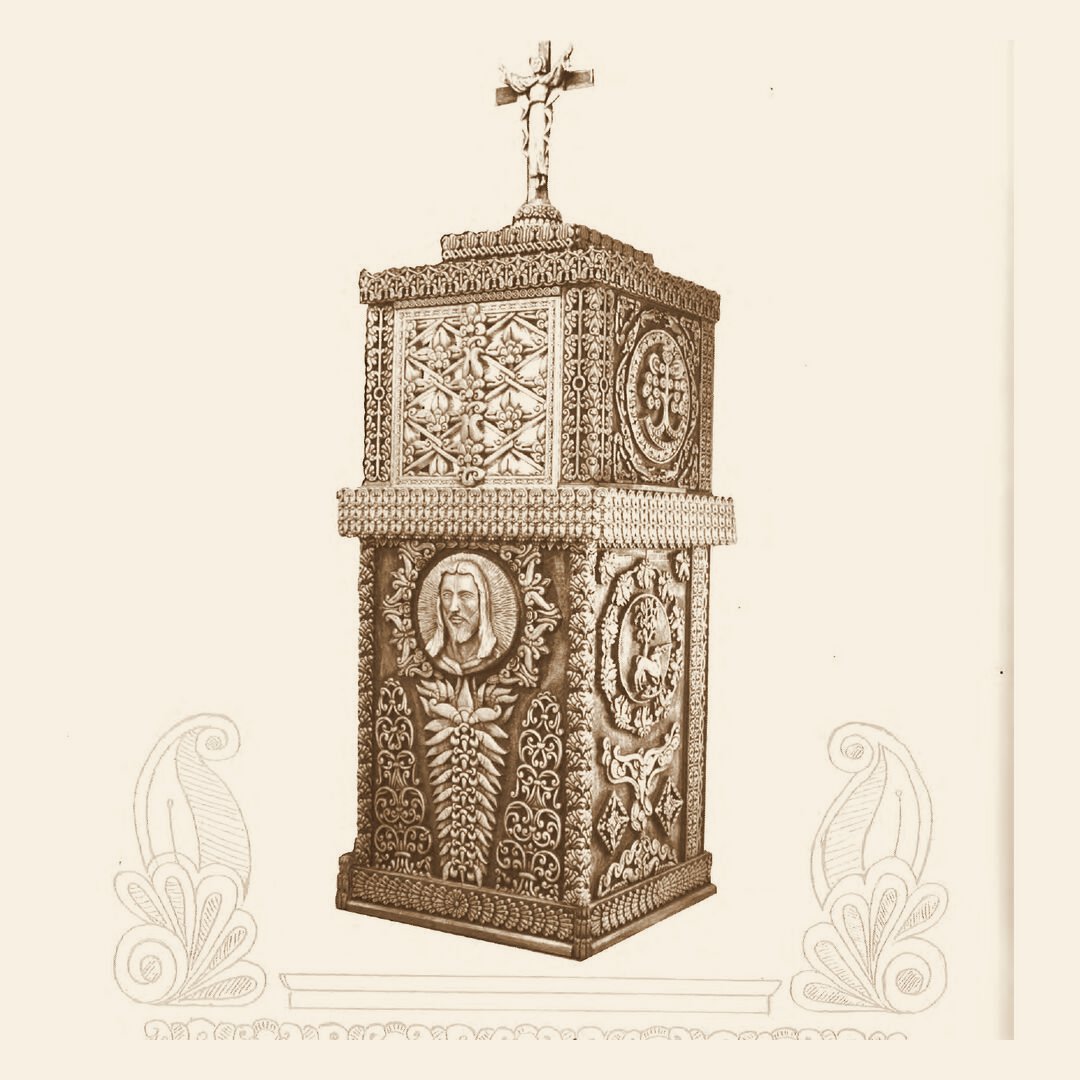 The Tabernacle+
Basswood, maple & birch
The heart of the sanctuary. Its doors imitate the silver purse of Galgóc, a treasure of the Hungarian conquest era — opening, like that purse, to hold what is most precious: the Blessed Sacrament.
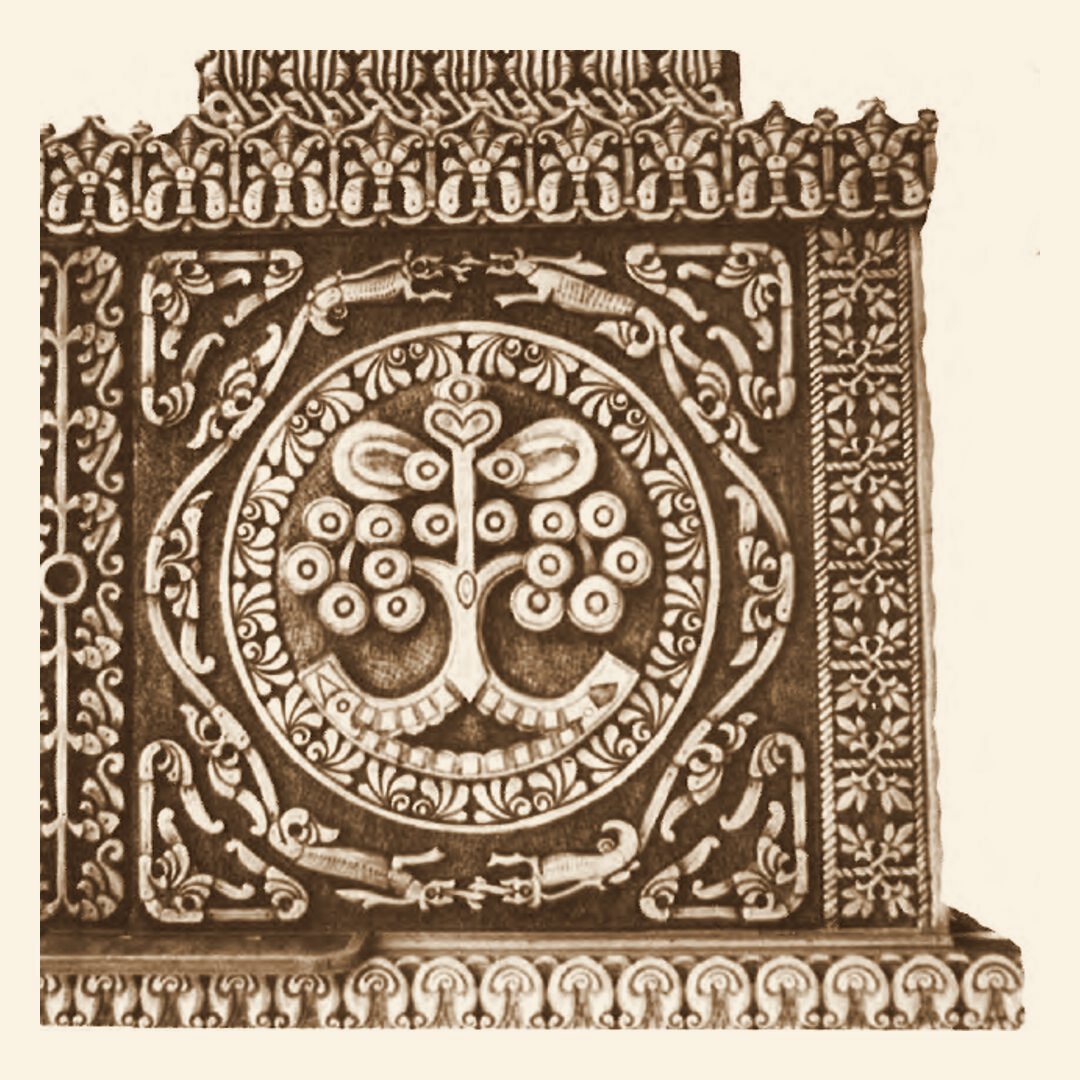 Tree of Life+
Életfa
The ancient tree of life, rooted in both Eden and Magyar folk art, spreads its fruit across a full panel of the tabernacle — a symbol of Christ, in whom all life is renewed.
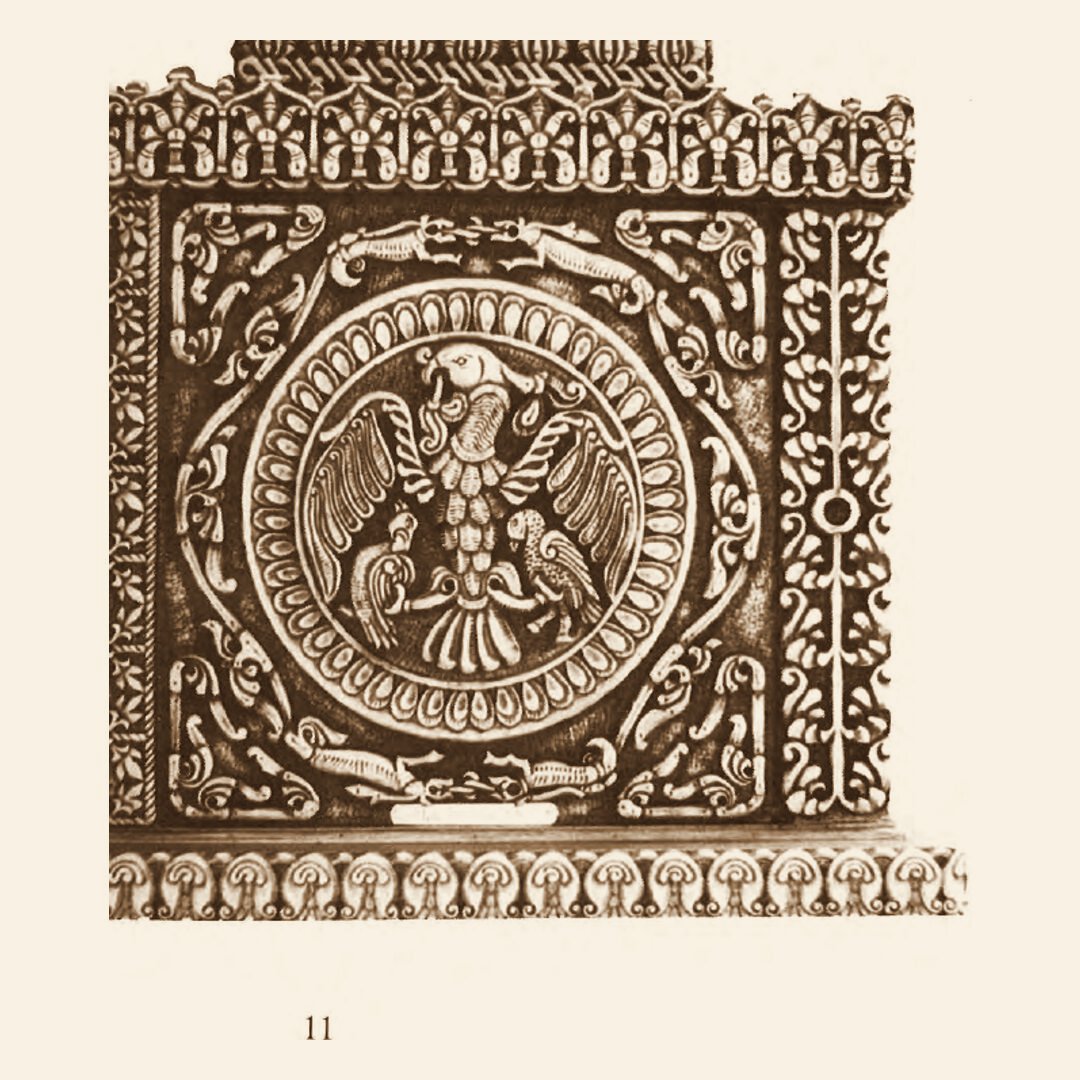 The Turul Bird+
From the Rakamaz find
The great bird of the House of Árpád, carved after a 10th-century archaeological find from Rakamaz — the emblem of the dynasty that gave Hungary its first king and our parish its patron: St. Stephen.
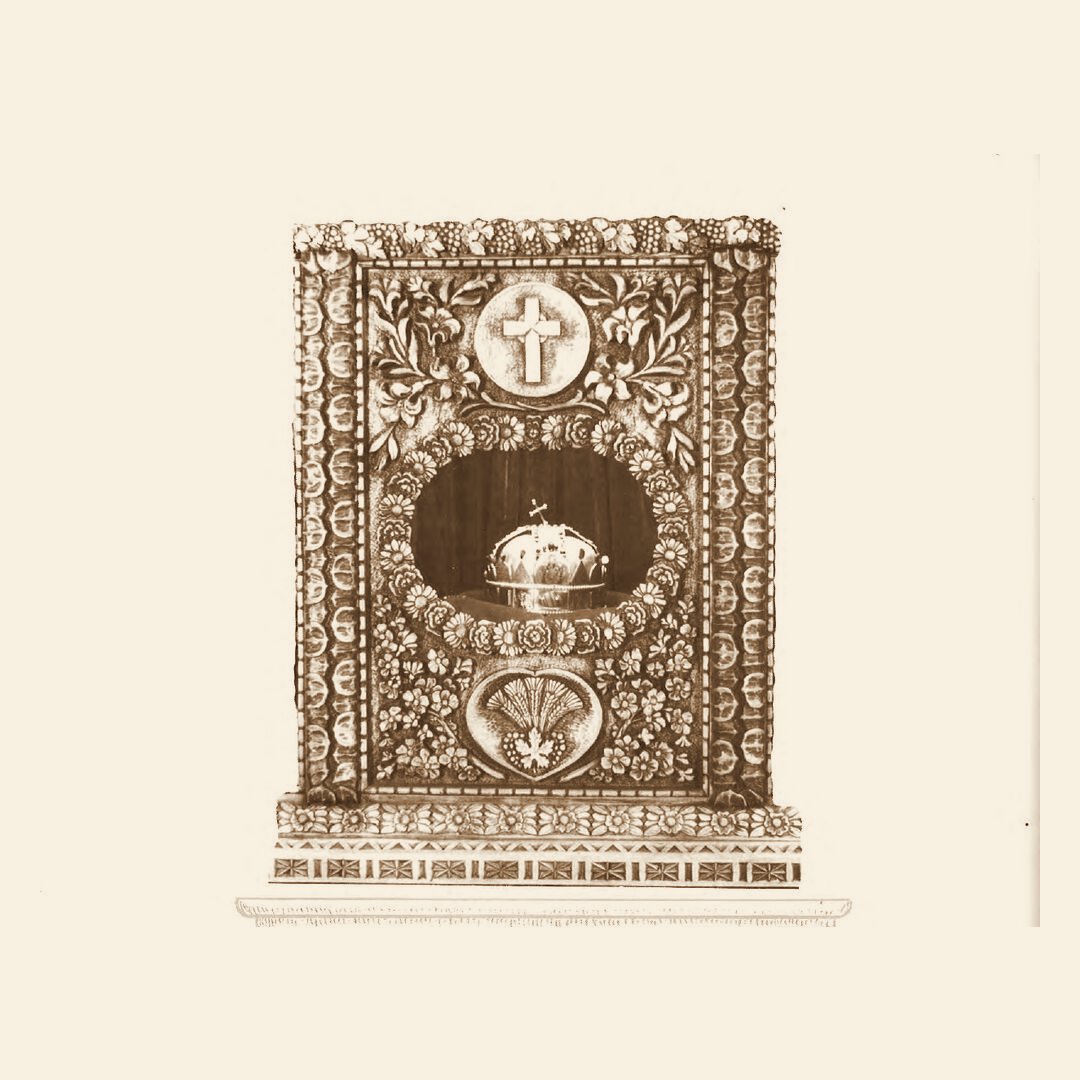 The Holy Crown+
Szent Korona
At the center of the main altar, a carved window holds a copy of the Holy Crown of Hungary — the crown Pope Sylvester II sent to Stephen in the year 1000, and the crown Stephen offered back to the Virgin Mary, making her Patrona Hungariae.
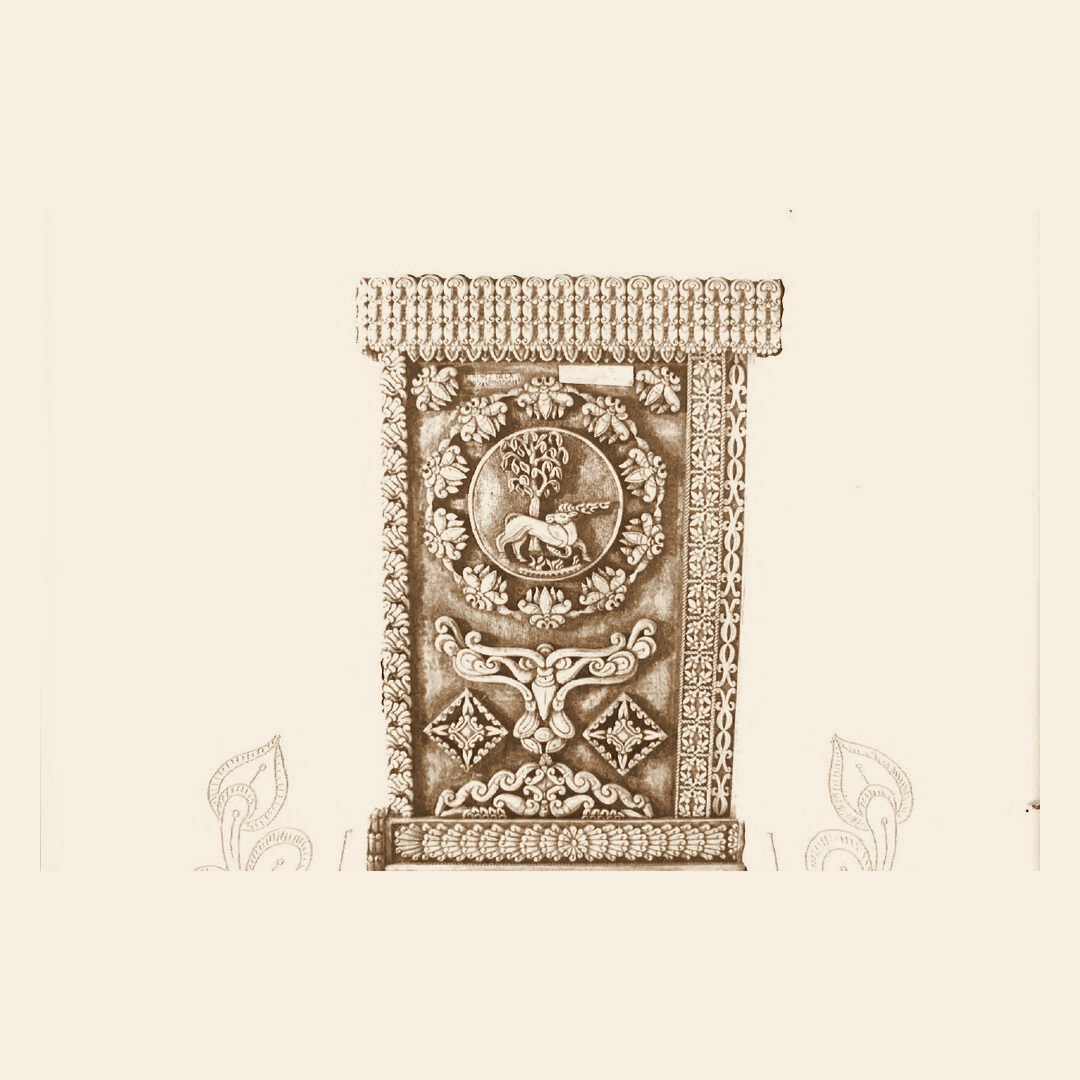 The Golden Stag+
From Zöldhalompuszta
The miraculous stag of Hungarian legend, modeled on the golden stag of Zöldhalompuszta — the creature that led the brothers Hunor and Magor to a new homeland, as faith leads us to ours.
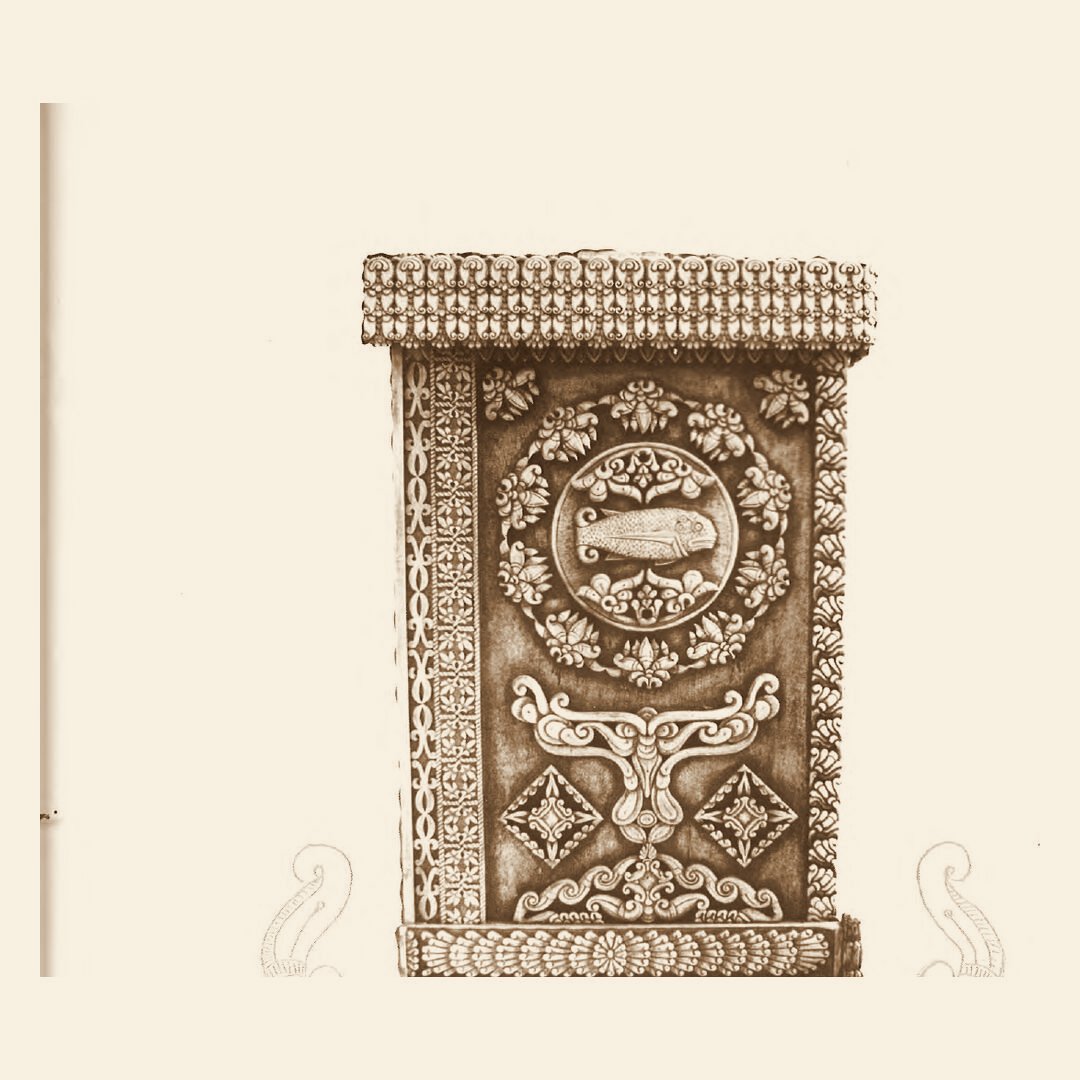 The Scythian Fish+
An early symbol of Christ
A fish rendered in the ancient Scythian style of the steppe — joining the oldest Christian symbol, ΙΧΘΥΣ, with the oldest artistic traditions the Magyars carried west.
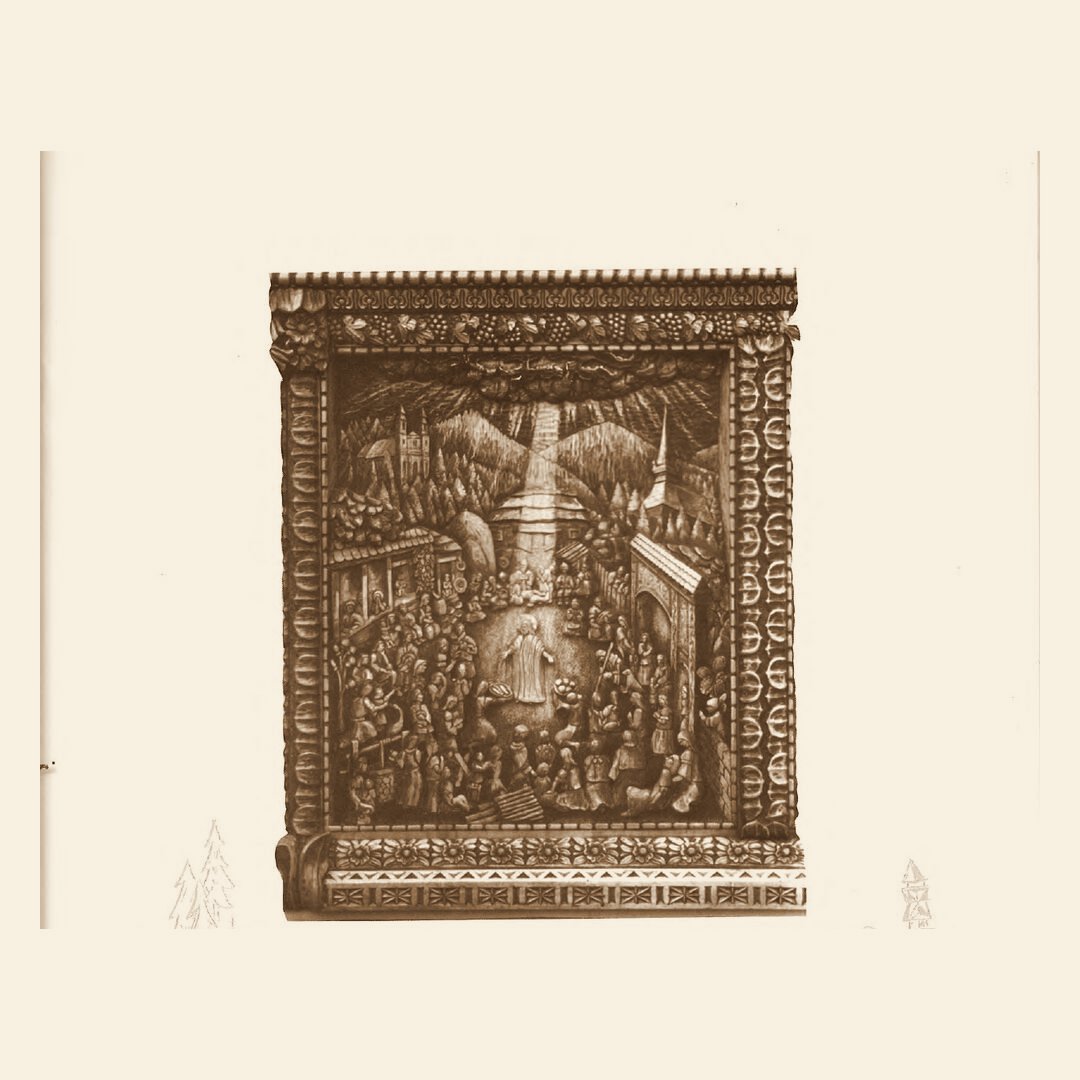 The Gospel Panels+
On the main altar
Christ stills the storm around a boat of Szekler fishermen; the five thousand are fed beneath a Szekler village gate, with the pilgrimage church of Csíksomlyó on the horizon. The Gospel, retold in the landscape of Transylvania.
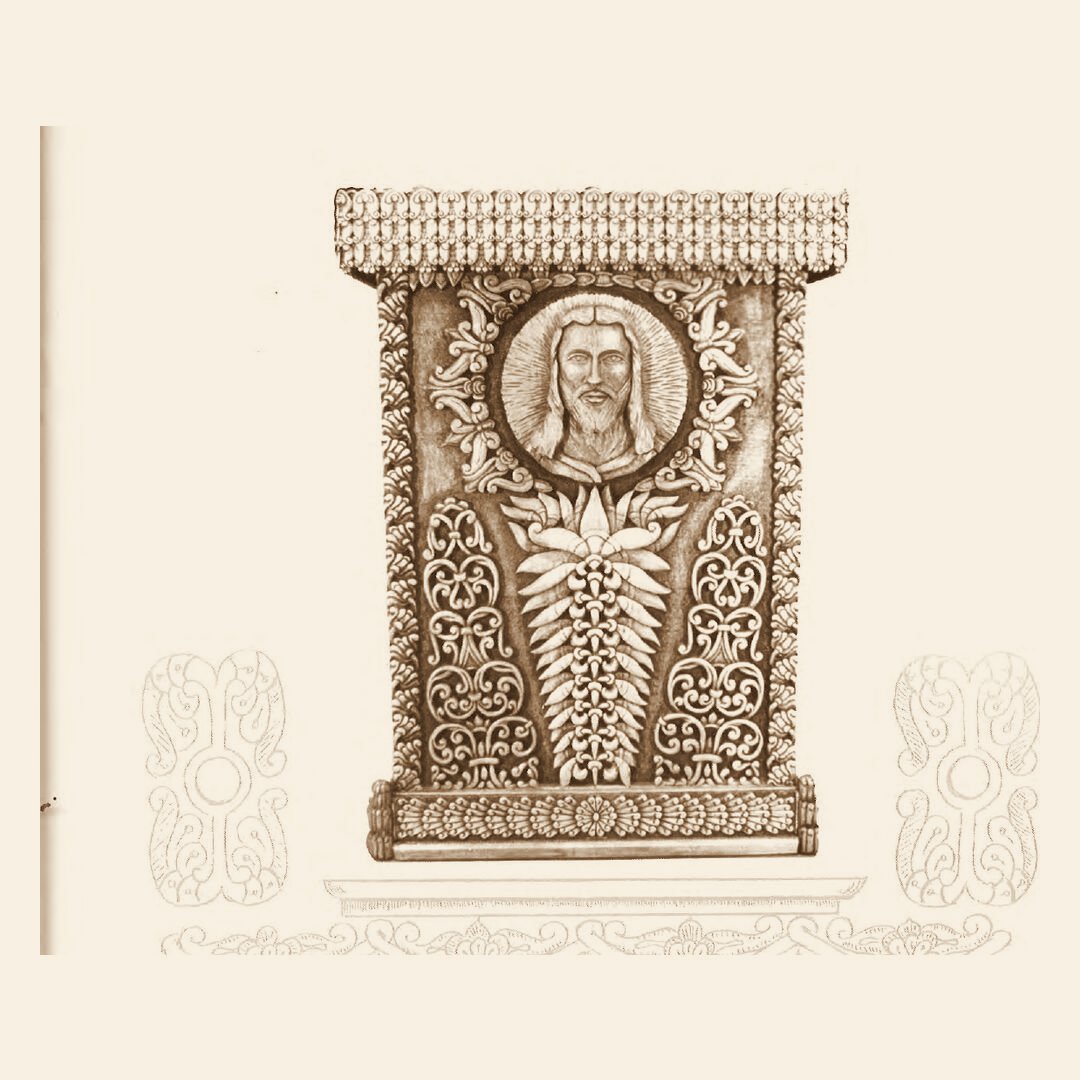 Christ Medallion+
On the tabernacle
The face of Christ in a carved medallion wreathed with folk ornament — the still center of a sanctuary in which, as Fr. Horvath wrote, “being in this church is like being already in Paradise.”
Forty years of the New Sanctuary
In 2026 the parish marks forty years since Béla Ferencz set down his chisel — and the parish bulletin honors it with a monthly series walking through the carvings, piece by piece.
Even the smallest furnishings carry the whole story. The credence table — where wine and water wait during Mass — is carved with old Hungarian ornament so that no plain surface disturbs the harmony around it. The celebrant’s armchair bears motifs from a purse excavated at Farkasrét; beneath them, the stylized lily of the Premonstratensian Order — to whom the parish is entrusted — stands above the small emblem of the Old Kingdom of Hungary and its Holy Crown. Two heraldic arms, one chair: the Order that serves this altar, and the homeland its people carried here.
He signed five years of work with three words: “Béla Ferencz 1985.”The master’s signature, carved into the sanctuary
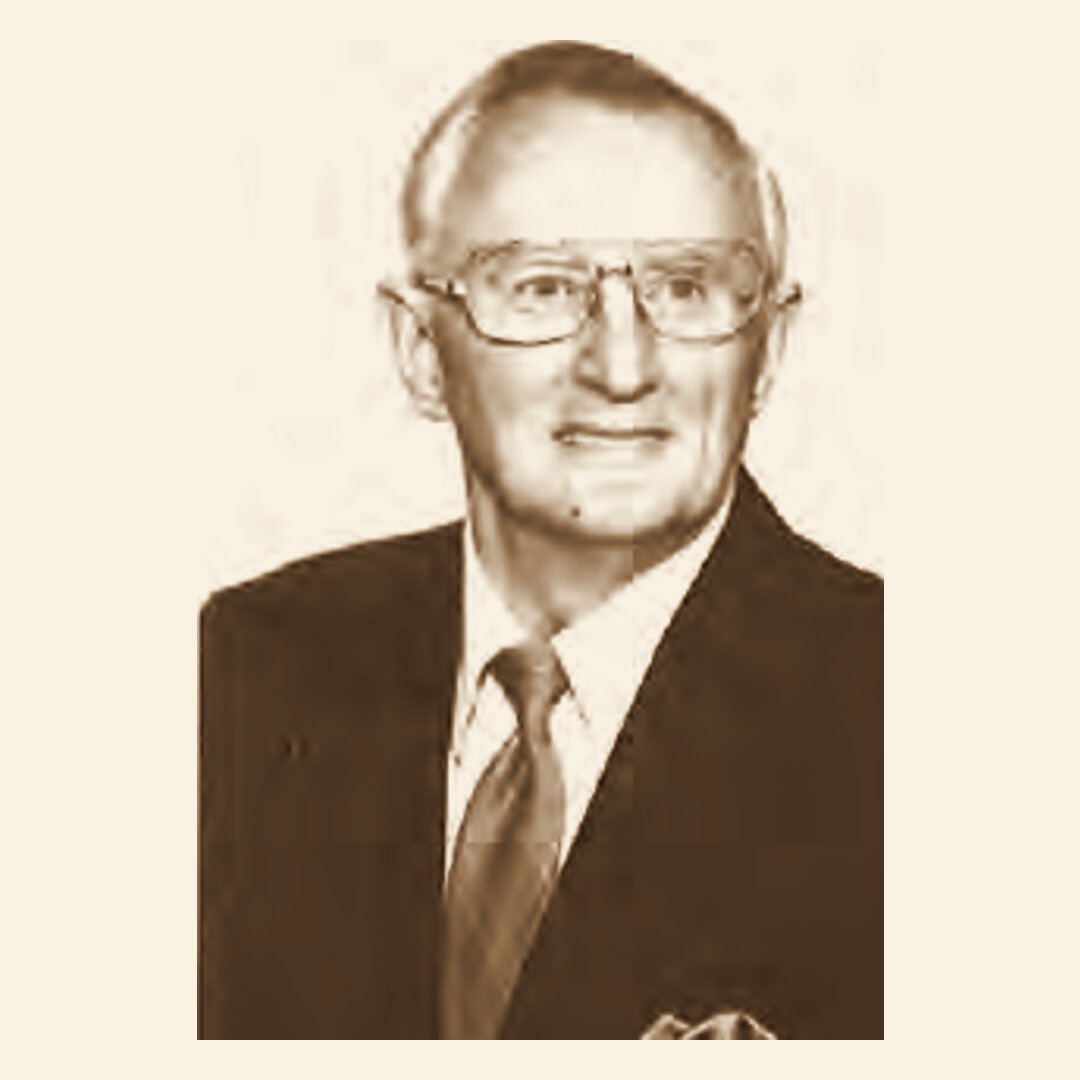
Béla Ferencz
Born in Marosvásárhely, Transylvania, and trained at the woodcarving school of Székelyudvarhely and in Budapest, Ferencz carved kopjafa grave markers for fallen comrades as a soldier in WWII, apprenticed in Bavaria after the war, and emigrated to America in 1951. His work was shown from the Romanian royal Summer Palace to the U.S. Capitol.
Commissioned by Fr. Benedict Horvath in 1981 — beginning with the pulpit — he spent five years completing the sanctuary.
Photographs from The Woodcarvings of St. Stephen’s Catholic Church by Béla Ferencz, text by Dr. Ákos Thiery.